
What You Actually Need to Know Before Building a Custom Home on Marco Island
If you're thinking about building a custom home on Marco Island, you've probably already figured out this isn't a normal construction project. The island looks like paradise, and it is, but building here comes with a set of challenges that most people don't fully understand until they're deep into the process.
We build custom homes on Marco Island, and we've seen firsthand what catches homeowners off guard. This isn't a sales pitch. This is the stuff we wish every client knew before they signed a contract with any builder.
The Elevation Issue Nobody Talks About Upfront
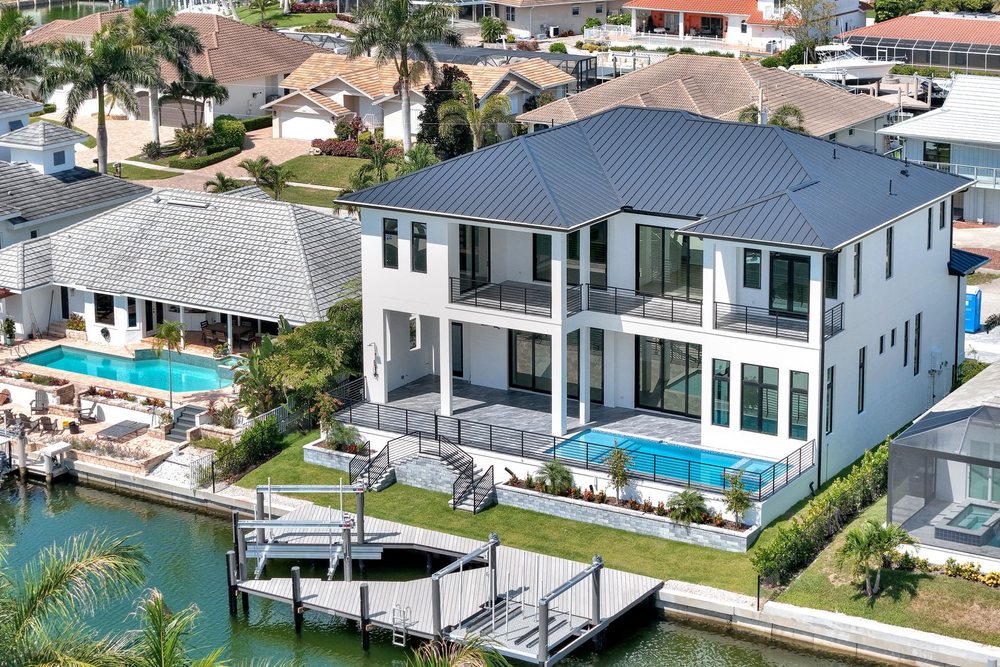
Here's something that surprises a lot of people: most of Marco Island sits in FEMA flood zones AE or VE. That means your home almost certainly needs to be elevated, sometimes 10 to 14 feet above grade, depending on your lot's base flood elevation.
That's not just a footnote in the permitting paperwork. It fundamentally changes what your home looks like, how it's accessed, what the entry sequence feels like, and how much it costs to build. The ground level under your living space isn't wasted. Smart design turns it into covered parking, storage, outdoor living, or all three. But you need a builder and architect who understand how to make an elevated home feel intentional, not awkward.
If a builder glosses over the elevation conversation early on, that's a red flag. It should be one of the first things discussed, not an afterthought.
Planning a build on Marco Island? We are an owner-led builder working there now. See our Marco Island custom homes page or call (813) 816-2469.
Marco Island Permitting Is Its Own Animal
Marco Island is its own city, so building permits go through the City of Marco Island's Building Services department, not Collier County. If you've only built on the mainland, the process here is different. Environmental reviews can come into play if your lot borders mangroves, protected waterways, or anything near the Rookery Bay National Estuarine Research Reserve. That can add weeks or months to your timeline.
Zoning setbacks on the island can also be tighter than expected, especially on smaller waterfront lots. We've seen projects where the buildable footprint was significantly smaller than the homeowner assumed when they bought the lot.
The takeaway: get a builder involved before you close on a lot. Not after. A quick site analysis can save you from buying a lot that won't support the home you actually want to build.
Waterfront Doesn't Mean What You Think It Means
On Marco Island, a huge percentage of lots are technically "waterfront." But there's a big difference between Gulf-front, direct-access canal, indirect canal, and bay-front. Each one has different exposure levels, seawall requirements, dock permitting rules, and construction considerations.
A Gulf-front lot means you're building for direct hurricane exposure: the island's 170 mph design wind speed with open-water exposure, salt spray corrosion on every exterior surface, and potential storm surge. A canal lot five blocks inland has totally different engineering requirements.
The point isn't that one is better than the other. It's that your builder needs to understand the specific conditions of your lot and design accordingly. Cookie-cutter specs don't work here.
Why Materials and Logistics Cost More on the Island
Everything that goes into your home arrives via two bridges. That's it. Every truss, every pallet of concrete block, every appliance. It all crosses one of two bridges connecting Marco to the mainland.
During season (roughly November through April), the island's population surges, traffic backs up, and delivery windows get tighter. Staging space on residential lots is often limited, which means your builder has to coordinate material deliveries carefully to avoid bottlenecks.
This is one of those things that doesn't seem like a big deal until it is. A builder who hasn't worked on the island will underestimate how much logistics planning matters here. An experienced island builder has already figured out the scheduling patterns that keep a project moving.
Hurricane-Resistant Construction Isn't Optional. It's the Baseline
After Irma, Ian, Helene, and Milton, nobody on Marco Island is debating whether hurricane resistance matters. But there's a difference between meeting minimum code and actually building a home that performs when a Category 4 storm makes landfall.
At minimum, every new home on Marco Island should have impact-rated windows and doors on every opening, concrete block or poured concrete walls, reinforced roof-to-wall-to-foundation connections (continuous load path), and a roofing system fastened for the island's 170 mph design wind speed. Those aren't upgrades. That's the baseline for building responsibly on a barrier island.
If a builder presents impact windows as an "upgrade package," walk away.
The Style Is Evolving. And That's a Good Thing
Marco Island used to be dominated by Mediterranean and traditional Florida styles. Those are still around, and some of them are beautifully done. But the island's architectural landscape is shifting.
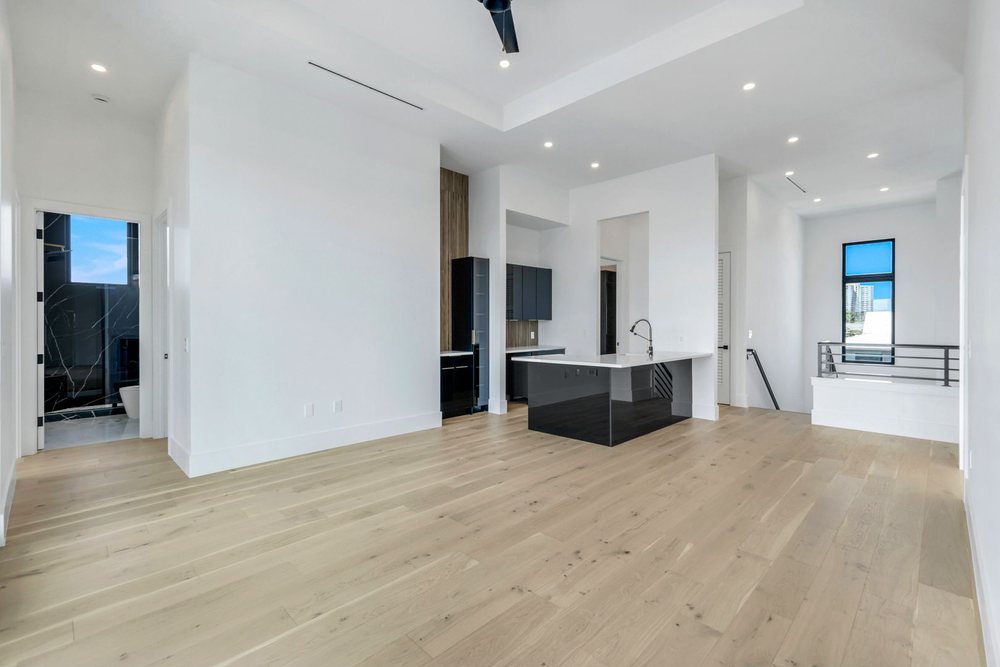
More new builds are going contemporary coastal: clean lines, expansive glass, flat or low-slope roofs, and open floor plans designed to pull in water views from every room. The elevation requirements that used to feel like a constraint are now being used as a design feature, with dramatic entry sequences and covered ground-level outdoor living.
The best homes on Marco Island right now are the ones where the architecture works with the island's realities instead of fighting them.
How to Choose the Right Builder for Marco Island
There are a lot of builders who will tell you they build on Marco Island. Fewer of them actually understand the island's specific challenges: the flood zones, the environmental regulations, the logistics, the City of Marco Island permitting process, and the engineering requirements for coastal construction.
Here's what to look for: ask how many homes they've built on the island or in similar coastal environments. Ask them to walk you through how they handle elevation requirements. Ask about their approach to hurricane-resistant construction, not just "do you do it" but how they do it. And ask about their relationships with local subcontractors, because on an island with limited access, having reliable crews who know the logistics makes a real difference.
Building a custom home on Marco Island is one of the best investments you can make on Florida's Gulf Coast. But it takes the right team to do it right.
Alexander² Construction is a licensed Florida general contractor (CBC1266523) building custom homes on Marco Island, Naples, Fort Myers, Tampa, and St. Petersburg. If you're planning a custom home on Marco Island, schedule a free consultation or call us at 813-816-2469.
Building where you just read about?
We build there. Send us the address and we will walk the flood zone, the seawall, and the budget. Both brothers read every inquiry.
